W8USR - Special Events
167th Anniversary of Fort Hamilton, New York
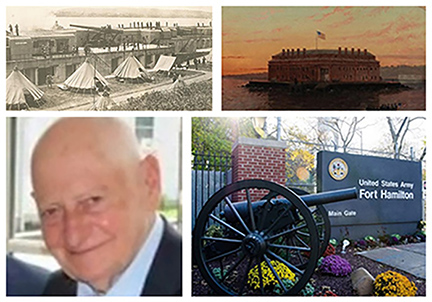
About the Event & Operator
On June 14, 1992, I logged a contact with Vincent Mattera (WB2AAP) operating a special event commemorating the 167th anniversary of laying the architectural cornerstone of the very first building at Fort Hamilton (June 11, 1825). Because Fort Hamilton is located directly in Brooklyn at the base of the Verrazzano-Narrows Bridge, Vincent was able to run this historic special event straight from his home shack.
The Deep History of Fort Hamilton
Fort Hamilton is a historic U.S. Army installation in Brooklyn, New York. It stands as the fourth-oldest continuously active military post in the United States. Named after Alexander Hamilton, the nation's first Secretary of the Treasury, the fort protects the critical Narrows strait—the primary shipping entrance into New York Harbor.
On July 4, 1776, American forces deployed a temporary gun battery on this exact site to fire upon the British fleet entering the harbor, successfully damaging the HMS Asia. Despite this defense, British troops made an amphibious landing here a month later, sparking the Battle of Brooklyn. Later, during the War of 1812, primitive earthwork defenses built on the site, collectively named Fort Lewis, successfully held a British naval blockade at bay, preserving New York City from a direct maritime invasion.
The vulnerabilities exposed during the War of 1812 prompted the federal government to build a massive network of permanent granite coastal fortifications known as the "Third System." The architectural cornerstone of this new granite fortress was laid on June 11, 1825. Construction concluded on July 10, 1831, when Battery F of the 4th U.S. Artillery arrived from Governors Island to form the fort's first permanent military garrison. During the Civil War, the fort served as a major training base for New York volunteer infantry and artillery regiments, and in 1863, federal troops deployed directly from Fort Hamilton into Manhattan to successfully quell the violent New York City Draft Riots. During both World War I and World War II, the base was transformed into a massive Military Embarkation Center where millions of American soldiers processed before shipping out to the European theaters.
Famous Figures in Residence
Before they fought on opposing sides of the American Civil War, several iconic military leaders served together at Fort Hamilton:
Captain Robert E. Lee: Assigned as the post engineer in 1841, Lee designed and executed structural updates to improve the waterproofing of the fort’s granite casemates.
Lieutenant Thomas "Stonewall" Jackson: Assigned to the post in the 1850s, Jackson was known locally for regularly attending services at the nearby St. John's Episcopal Chapel (often called the "Church of Generals").
Fort Hamilton Today
Today, Fort Hamilton remains the only active military installation in metropolitan New York City, providing logistical and base support for the Army National Guard and the U.S. Army Reserve. The landmarked 19th-century stonework is heavily preserved. The fort's original "caponier"—a freestanding fortification built inside the dry moat—has been fully restored and houses the official Harbor Defense Museum, showcasing generations of historic military weaponry, uniforms, and local battlefield artifacts.
Station Log: Contact History
| Date / Year | Special Event Call | My Callsign Used | Time (UTC) | Band | Mode |
|---|---|---|---|---|---|
| June 14, 1992 | WB2AAP | N8SWQ | 15:51 UTC | 20 Meters | USB |