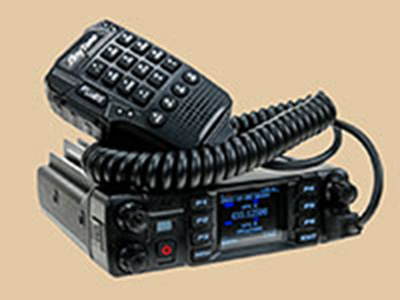
AnyTone AT-D578UVIII Plus Tri-Band Mobile Transceiver
Technical Specifications
Frequency Ranges & Modes
- VHF Transmit (TX): 144–148 MHz
- 1.25m Transmit (TX): 222–225 MHz
- UHF Transmit (TX): 420–450 MHz
- AM Aviation Receive (RX): 108–136 MHz
- Standard Receive (RX): 136–174 MHz, 400–480 MHz
- Supported Modes: DMR (Digital Tier I & II) and FM (Analog)
RF Power Output
- VHF (2m): Turbo: 55W–60W / High: 25W / Mid: 10W / Low: 1W
- UHF (70cm): Turbo: 40W–45W / High: 25W / Mid: 10W / Low: 1W
- 1.25m (220 MHz): Mid: 5W / Low: 1W
System Capacity
- Memory Channels: 4,000 channels
- DMR Talk Groups: 10,000
- Digital Contacts: 500,000 (Holds the global DMR-MARC database)
- Zones: 250 zones (Up to 250 channels per zone)
Display & Audio
- Screen: 1.77-inch Color TFT Display with adjustable brightness
- Display Modes: Selectable single or dual-channel view
- Audio Output: Single or dual speaker configuration options
Core Capabilities
- APRS Functionality: Supports both Analog and Digital (DMR) APRS TX & RX
- GPS: Integrated internal module for data location services
- Bluetooth: Built-in module for wireless PTT buttons and audio accessories
- Repeat Features: Cross-band repeat and Single Frequency Repeater (SFR) modes
- Roaming: Automatic DMR repeater roaming while mobile
Electrical & Physical Specs
- Input Voltage: 13.8 VDC ±15%
- Maximum Current: 15.0 Amps max draw
- Channel Spacing: 25 kHz (Wideband) / 12.5 kHz (Narrowband)
- Dimensions: 5.55 in (W) x 1.57 in (H) x 7.40 in (D)
- Weight: Approximately 2.29 lbs
Station Role
The primary station role of the AnyTone AT-D578UVIII Plus is to bring a mobile (base setup) to the W8USR operating deck. A Radio Shack 20 Amp power supply was brought in from storage to be used for powering this radio at the desk. The RF output is run through the outdoor 2 meter/70 cm antenna.
History with Radio W8USR
The AnyTone AT-D578UVIII Plus was purchased in the summer of 2026 and freshly installed on the station operating desk. As a recent addition to the W8USR hardware fleet, it is actively building its history as operators begin testing its tri-band capabilities and integrating it into daily logging routines.